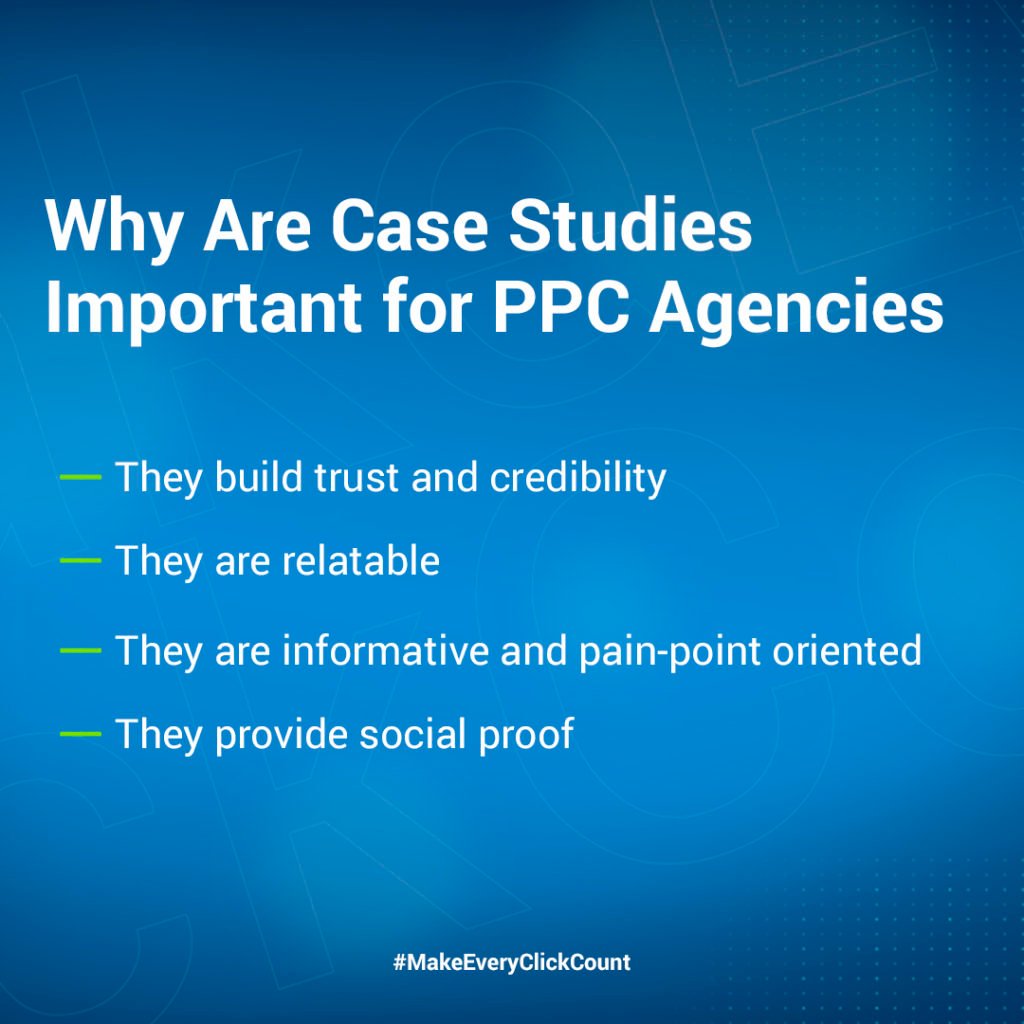

PPC marketers and business leaders live in a world where results speak louder than promises. If you’re running campaigns for clients, you already know that showing performance metrics is one thing, but turning them into a story that wins trust is something else entirely. That’s where PPC case studies come in.

A well-crafted PPC campaign case study shows the real journey: the client’s challenge, the strategy you built, and the measurable results that followed. For many agencies, case studies are more than just portfolio pieces, they’re powerful sales tools that can turn a prospect into a long-term client.

Whether you’re looking for inspiration, want to refine your agency’s pay-per-click case study process, or simply need tips on avoiding the most common mistakes, this guide will give you everything you need to create the best PPC case studies.

What Is a PPC Case Study and Why Does It Matter?

A PPC case study is more than just a recap of campaign numbers. It’s a story that shows how your strategy turned a challenge into measurable results. Think of it as proof that your PPC agency doesn’t just run ads, but delivers impactful business growth.

In a typical case study on PPC, you’ll see a clear breakdown of the client’s background, their goals, the tactics used (keywords, bidding, ad copy, landing pages), and the results achieved. A PPC case study needs to connect the dots between business challenges and the outcomes your campaigns produced.

For agencies, the importance of case studies for marketing agencies can’t be overstated. Prospective clients often check PPC agency reviews or testimonials before making a decision, but reviews alone don’t show the full picture. A detailed pay-per-click case study does. It gives context, shows how you think, and proves that you’ve handled real challenges across industries.

Strong PPC campaign case studies help in three ways:

  • Building credibility: You’re not just saying “we get results”—you’re showing real proof of how you did it.
  • Winning new business: Many agencies report that a strong PPC agency case study is what tips the scales in their favor during pitches.
  • Positioning your expertise: Whether you’re a consumer goods PPC agency or focused on IT, healthcare, or ecommerce, case studies let you show niche experience.

How Case Studies Help PPC Agencies Win New Clients

If you’re running a PPC agency, you know that to land new clients, you need more than promises; you need to show results. That’s where PPC agency case studies become a secret weapon. A well-crafted case study provides real proof that your strategies work, giving prospects confidence that you can deliver the same success for them.

Here’s how case studies on PPC help agencies grow their client base:

  • Build trust quickly: Potential clients can see exactly how you solved problems for businesses like theirs. It’s one thing to say you’re the best PPC agency, but a clear pay-per-click case study backs that claim with data and context.
  • Showcase expertise: From campaign strategy to funnel optimization, a detailed PPC campaign case study demonstrates your technical know-how and industry experience. 
  • Highlight tangible results: Numbers speak louder than words. Metrics like traffic growth, conversions, CPA, and ROAS in your PPC agency reviews make your work concrete, not just theoretical.
  • Differentiate from competitors: Many agencies rely on testimonials or broad claims. The best PPC case studies give you a competitive edge by showing your process, thought leadership, and real impact.

What Should a PPC Case Study Include?

To create a pay-per-click case study that truly impresses, you need to cover key components that tell a compelling story, giving context and insight. 

Focus on the measurable improvements in important metrics like conversion rates, click-through rates (CTR), return on ad spend (ROAS), and cost per conversion. 

Adding charts, graphs, and visuals can help readers quickly grasp the impact of your PPC campaigns and make the case study more engaging.

Here’s what to include:

1. Define the Client’s Challenge

Industry & Client Background

Start by introducing the client and their industry. This gives readers context for the campaign results. For example, an IT PPC case study looks very different from a consumer goods PPC agency project. Explain the market landscape, the client’s position, and why they were seeking a PPC agency.

Business Goals & Initial Challenges

Next, outline what the client wanted to achieve and the hurdles they faced. Maybe they struggled with low-quality leads, high CPA, or poor ROAS. Showing these initial challenges highlights the value of your campaign and sets the stage for the strategy you implemented. Provide context on their target audience and specific goals, and quantify the challenge with data where possible.

2. Describe the PPC Strategy and Solutions

Campaign Strategy: Keywords, Copy, Landing Pages

Explain the tactics you used to tackle the client’s challenges. This includes keyword selection, ad copy, and landing page design. A solid PPC campaign case study should show how these elements were aligned to target the right audience, increase engagement, and drive conversions. 

Explain how you tailored the campaigns to the client’s unique needs and highlight any innovative techniques or tools used. Show how your approach differed from their previous efforts.

Budgeting & Bidding Techniques

Clients want to know how budgets were managed. Include details on bidding strategies, allocation across campaigns, and any adjustments made to maximize ROI. Showing smart budget management strengthens the credibility of your PPC agency review.

A/B Testing and Optimization

Highlight how continuous A/B testing shaped better outcomes. Explain what ad variations you tested, which elements performed best, and how optimization improved overall campaign performance. This is a key element that shows your expertise and analytical approach.

Funnel Improvements & Cross-Channel Integration

Finally, discuss how you enhanced the client’s marketing funnel and integrated PPC with other channels. Did you adjust retargeting sequences, improve landing pages, or align messaging across platforms? Including this shows a comprehensive approach that goes beyond simple ad management.

3. Essential Components for a Standout Case Study

  • Catchy headline: A brief title that sums up the campaign’s success.
  • Overview: A short introduction to the client, the challenge, and the solution you provided.
  • Detailed body: A step-by-step look at your strategy, solutions, and results.
  • Summary & takeaways: End each case study with a summary of key insights. Highlight what worked, lessons learned, and the overall impact of the campaign. This helps readers quickly grasp the benefits of working with your agency.
  • Visuals: Charts, graphs, and screenshots to illustrate results and make data easy to understand.
  • Client quotes: Feedback from the client that emphasizes their satisfaction and the impact of your work.
  • CTAs: Always include a clear next step for interested readers. Whether it’s scheduling a consultation, requesting a free audit, or contacting your team, strong calls-to-action convert readers into potential clients and maximize the impact of your PPC campaign case studies.

How to Present PPC Results That Impress

Once you’ve built a strong PPC case study, the way you present the results can make all the difference. Since prospective clients want to see clear, measurable outcomes, focus on the metrics that matter most and present them in a way that’s easy to understand.

By presenting results with a mix of data, visuals, and client insight, your PPC campaign case studies will impress prospects, showcase your expertise, and help your agency stand out from the competition.

Traffic Growth

Start with the most visible impact: increased website traffic. Show how your PPC campaign case study drove more visitors to the client’s site over time. Use graphs or charts to highlight trends, peak performance periods, and the difference compared to previous campaigns. This sets the stage for deeper results.

Conversions & Leads

Traffic alone isn’t enough! What really matters are the actions users take. Highlight improvements in conversions and lead generation. Show how your campaigns attracted high-quality leads and contributed to business growth. Including comparisons to previous periods can make these results even more compelling.

Cost Per Acquisition (CPA)

Clients want efficiency, and CPA is one of the clearest ways to demonstrate it. Break down how much each conversion or lead cost before and after your pay-per-click case study interventions. A lower CPA shows that your strategies are not only driving results but doing so cost-effectively.

Return on Ad Spend (ROAS)

ROAS is the ultimate performance metric for many clients. Show the revenue generated compared to ad spend and explain how your approach maximized return. Highlighting improvements in ROAS positions your agency as results-driven and data-focused, making your PPC agency review more persuasive.

Client Feedback

Numbers are powerful, but client voices add authenticity. Include quotes or testimonials that show satisfaction and trust in your work. Positive feedback reinforces the success of the campaign and makes your PPC agency case study more relatable and credible.

Real PPC Case Study Examples by Industry

Understanding how PPC strategies perform across different sectors can provide valuable insights. Here are some real-world examples showcasing the impact of well-executed PPC campaigns:

Healthcare

Magnolia Healthcare collaborated with a PPC agency to enhance their online presence. Through targeted campaigns and strategic optimizations, they achieved a 60% reduction in cost per lead, even in a highly competitive market. Their monthly ad spend scaled to over $20,000, demonstrating the effectiveness of their PPC strategy.

Legal

Nunez Law’s PPC case study, developed by On The Map Marketing, offers a compelling example of how targeted digital strategies can transform a law firm’s online presence. Initially, Nunez Law faced challenges such as zero conversions and a low CTR of 1.5%. The firm lacked a dedicated landing page and struggled with poor keyword targeting. 

On The Map Marketing addressed these issues by creating tailored landing pages for each practice area, refining keyword strategies, and implementing audience targeting. The case study is presented in a well-structured format, including a clear headline, an overview of the client and their challenges, detailed descriptions of the strategies implemented, and measurable results. Visual aids, such as charts and graphs, are used to enhance understanding and engagement. 

E-commerce

Searchbloom’s PPC case study for a national bulk clothing store exemplifies effective digital marketing strategies. The agency identified key issues in the client’s previous campaigns, such as inadequate product-level bidding, generic ad copy, and improper remarketing audience setups. To address these, Searchbloom implemented a structured approach emphasizing Assets, Control, and Experimentation (A.C.E.). This involved crafting tailored ad copy for different customer personas, segmenting product bids for better return on ad spend (ROAS) insights, and refining remarketing lists for search ads. 

The case study is well-organized, featuring a clear headline, an introduction to the client’s challenges, a detailed description of the strategies employed, and a conclusion highlighting the successful outcomes. Visual aids, such as charts and graphs, are utilized to illustrate the results, enhancing the case study’s effectiveness in demonstrating the agency’s capabilities.

Avoid These Common PPC Case Study Mistakes

Even the most impressive PPC campaigns can lose their impact if the case study isn’t presented well. Avoiding common pitfalls helps your PPC agency case study stand out and resonate with prospective clients.

  • Focusing only on results: Numbers are important, but don’t skip explaining the strategy behind the results. Readers want to understand how you achieved success, not just see the metrics.
  • Being too vague: Avoid generic statements like “we improved conversions.” Instead, provide specifics about the client’s challenges, the exact strategies you implemented, and measurable outcomes.
  • Overloading with data: Too many charts or metrics can overwhelm readers. Highlight the most important KPIs, such as CTR, conversions, CPA, and ROAS, and use visuals to make them clear.
  • Ignoring context: Each client is unique. Failing to explain the industry, target audience, or market conditions can make your case study hard to relate to.
  • Skipping visuals or testimonials: Including screenshots, graphs, and client quotes strengthens credibility and engagement. A case study without visual evidence or client feedback may feel flat and unconvincing.

How ClickGuard Helps Your PPC Case Studies Stand Out

Your PPC case studies are only as impressive as the data behind them. ClickGuard helps agencies show real, high-quality results by protecting campaigns from fraudulent clicks and inaccurate metrics.

  • Block click fraud: ClickGuard identifies and blocks fake clicks from bots, click farms, and low-quality traffic. This keeps campaigns focused on real potential customers, making your case studies more credible and trustworthy.
  • Increase ROAS with clean traffic: By filtering out invalid traffic, ClickGuard ensures your client’s ad spend is only going toward real engagement. Higher-quality clicks mean better ROAS, which can be clearly highlighted in your case studies.
  • Enhance reported metrics: With ClickGuard, reported KPIs like conversions, CTR, and cost per acquisition (CPA) reflect actual campaign performance. This makes your PPC agency case study data more accurate and persuasive to prospective clients.
  • Support higher conversion rates: Cleaner traffic leads to better targeting and more meaningful engagement. When campaigns attract genuine prospects, conversion rates improve, giving your case studies stronger results to showcase.

FAQs

What does a PPC agency do?

A PPC agency manages pay-per-click advertising campaigns for clients, helping them attract qualified traffic, generate leads, and maximize ROI. They handle everything from keyword research and ad copy creation to bidding strategies, landing page optimization, A/B testing, and performance reporting, ensuring campaigns run efficiently and effectively.

What are good examples of case studies?

Good case studies clearly outline the client’s challenges, the strategies implemented, and the measurable results. They use a structured format with a strong headline, concise introduction, detailed body, visuals, and client testimonials. 

How much does a PPC agency charge?

PPC agency pricing varies based on services, campaign size, and client goals. Some charge a monthly management fee, while others take a percentage of ad spend. Fees can range from a few hundred dollars per month for small businesses to several thousand dollars for large, complex campaigns.

Which is the best PPC management company?

The best PPC management company depends on your needs, industry, and budget. Look for agencies with strong PPC agency reviews, proven case studies on PPC, and a track record of achieving results like higher ROAS, lower CPA, and measurable traffic growth.

How many pages should a case study be?

A case study should be long enough to provide context, outline strategies, and present results, but concise enough to hold attention. Typically, 2–4 pages or 800–1,500 words is ideal, with clear headings, visuals, and summaries for easy scannability.